
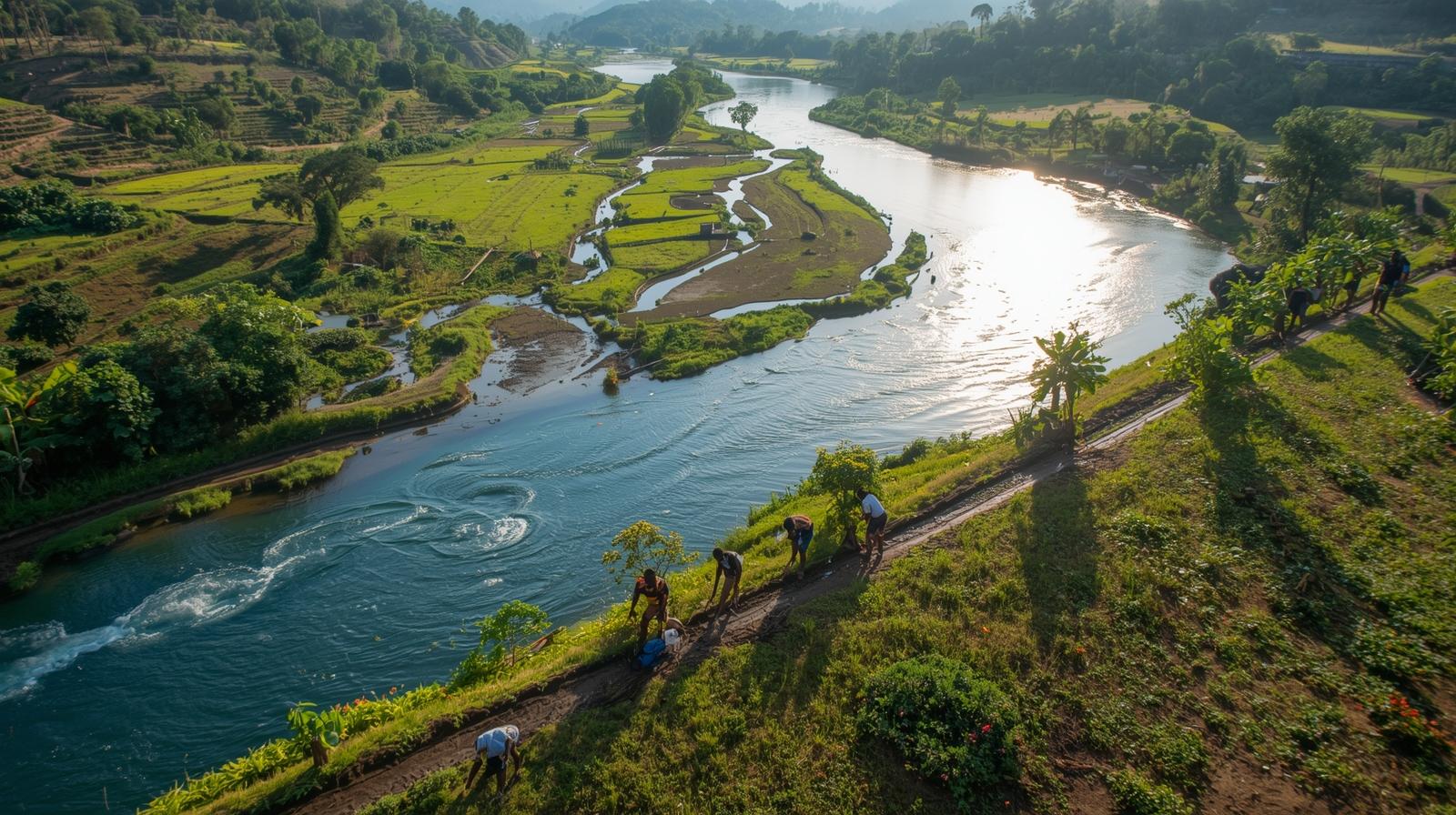

The lack of access to safely managed drinking water and sanitation for 2 billion and 3 billion, respectively, is an enduring problem that increases public health and environmental risks and impacts. Yet access to these services is a fundamental human need and a universally recognized human right. Across Sub-Saharan Africa, approximately four hundred eight (408) million people remain deprived of this right.
In Uganda particularly, water constitutes more than a basic necessity; it underpins public health, agricultural productivity, educational opportunities, and socio-economic development. Nevertheless, despite commendable efforts to enhance infrastructure and service delivery, significant disparities persist, especially in rural and marginalized areas.
To effectively address the existing inequities, Uganda must adopt a revised perspective on water access, transitioning from viewing water as a commodity to recognizing it as a legal and moral obligation. This poses a question: How can Uganda’s legal frameworks and civil society organizations collaborate to ensure the realization of the human right to water?
A thorough analysis of the country’s 1995 Constitution, the role of non-governmental organizations (NGOs), and the current governance challenges will provide a comprehensive overview of the progress achieved and the outstanding gaps that must be addressed in pursuing water justice.
Uganda’s Legal and Policy Frameworks on Water as a Human Right.
The 1995 Constitution of Uganda, although not explicitly articulated, establishes a robust framework for the human right to water. Article XIII within the National Objectives and Directive Principles of State Policy mandates that the state shall safeguard essential natural resources, including land, forests, and water, for the collective benefit of the populace. Furthermore, Article XIV(b) affirms the right of every citizen to access clean and safe water and a healthy environment.
While the Constitution does not explicitly state a “right to water,” legal scholars interpret its provisions as inherently supporting such a right. The constitutional emphasis on environmental protection and public health suggests a state duty to ensure that all Ugandans have access to safe water.
This foundational framework is further supported by legislation, including the Water Act (Cap 152) of 1997 and the National Water Policy of 1999. These legislative measures are designed to promote universal access to water, facilitate integrated water resource management, and encourage sustainable usage. Nevertheless, the execution of these policies frequently encounters obstacles, such as financial limitations, inadequate institutional capacity, and governance challenges at both national and local levels.
Civil Society Organisations(CSOs) in Action
The non-governmental organizations (NGOs) have assumed a critical role in providing water services and promoting rights-based strategies. Notable organizations such as WaterAid Uganda, IRC Uganda, the Uganda Water and Sanitation NGO Network (UWASNET), Water for People, World Vision, among others, are leading initiatives aimed at enhancing water accessibility.
Civil society organizations have played a crucial role in enhancing access to clean water. They have made substantial investments in developing water supply infrastructure, demonstrating a strong commitment to this vital issue. Their efforts include the construction of boreholes, the promotion of rainwater harvesting, the provision of training to local water user committees, engagement in policy advocacy, and the implementation of business models designed to ensure equitable access to water for all.
According to the Ministry of Water and Environment (2018), non-governmental organizations (NGOs) are responsible for approximately 40% of rural water interventions in Uganda. This statistic highlights their critical role not only as service providers but also as agents of systemic change.
Some non-governmental organizations (NGOs) in Uganda have adopted explicit human rights-based approaches prioritizing participation, transparency, and accountability. These organizations strive to empower communities to assert their rights and to hold duty bearers accountable.
Nevertheless, not all NGOs exhibit the same level of commitment to these principles. A significant number primarily focus on technical service delivery, often neglecting the integration of human rights norms within their strategies and operational frameworks.
Identifying the Gaps in Policy and Practice
Despite Uganda’s robust legal framework and the proactive involvement of non-governmental organizations, significant gaps continue to exist. A critical concern lies in the disconnect between constitutional provisions and the initiatives pursued by NGOs. Numerous interventions fail to adequately reference or capitalize on Uganda’s legal commitments, resulting in missed opportunities to enhance governmental accountability and to promote public awareness of legal rights.
The implementation of human rights principles in water governance is often inconsistent. Marginalized groups, including women, youth, and individuals with disabilities, frequently find themselves excluded from governance processes. Furthermore, accountability mechanisms, such as community-based grievance systems and transparent budget disclosures, are often underdeveloped or absent in many programs.
A significant challenge that persists is the lack of empirical research evaluating the extent to which non-governmental organizations (NGOs) adopt and implement rights-based approaches. Without a robust evidence base, assessing impact or replicating successful practices poses considerable difficulties.
The Urgency of Rights-Based Water Governance
Uganda’s water sector is increasingly confronted with challenges stemming from rapid urbanization, industrialization, climate change, and population growth. Addressing these issues necessitates more than technical solutions; it requires governance models that are equitable, inclusive, and anchored in legal principles. A rights-based approach offers a comprehensive framework for confronting these challenges. By aligning Uganda’s constitutional mandates with grassroots initiatives, stakeholders can transition water from a contested resource to a universally recognized right. This governance model prioritizes dignity, participation, and accountability in the management of water resources.
A Call to Action
Embracing a human rights perspective compels all stakeholders—including governmental bodies, non-governmental organizations, communities, and international partners—to move beyond superficial infrastructure evaluations and engage in deeper inquiries such as: “Who is being marginalized?” “Are policies effectively serving the most vulnerable populations?” and “Do programs promote equality and uphold human dignity?”
Uganda possesses the necessary legal frameworks, civil society capabilities, and community engagement to meaningfully address these critical questions. What remains imperative is the enhancement of coordination between constitutional principles and the operational practices of non-governmental organizations. Additionally, there needs to be an increased focus on human rights in program development and sustained advocacy aimed at actualizing the human right to water for all Ugandans.
“Water is a fundamental human right, not a commodity. We must collaborate to ensure equitable access for all individuals worldwide.”
Leave a Reply