
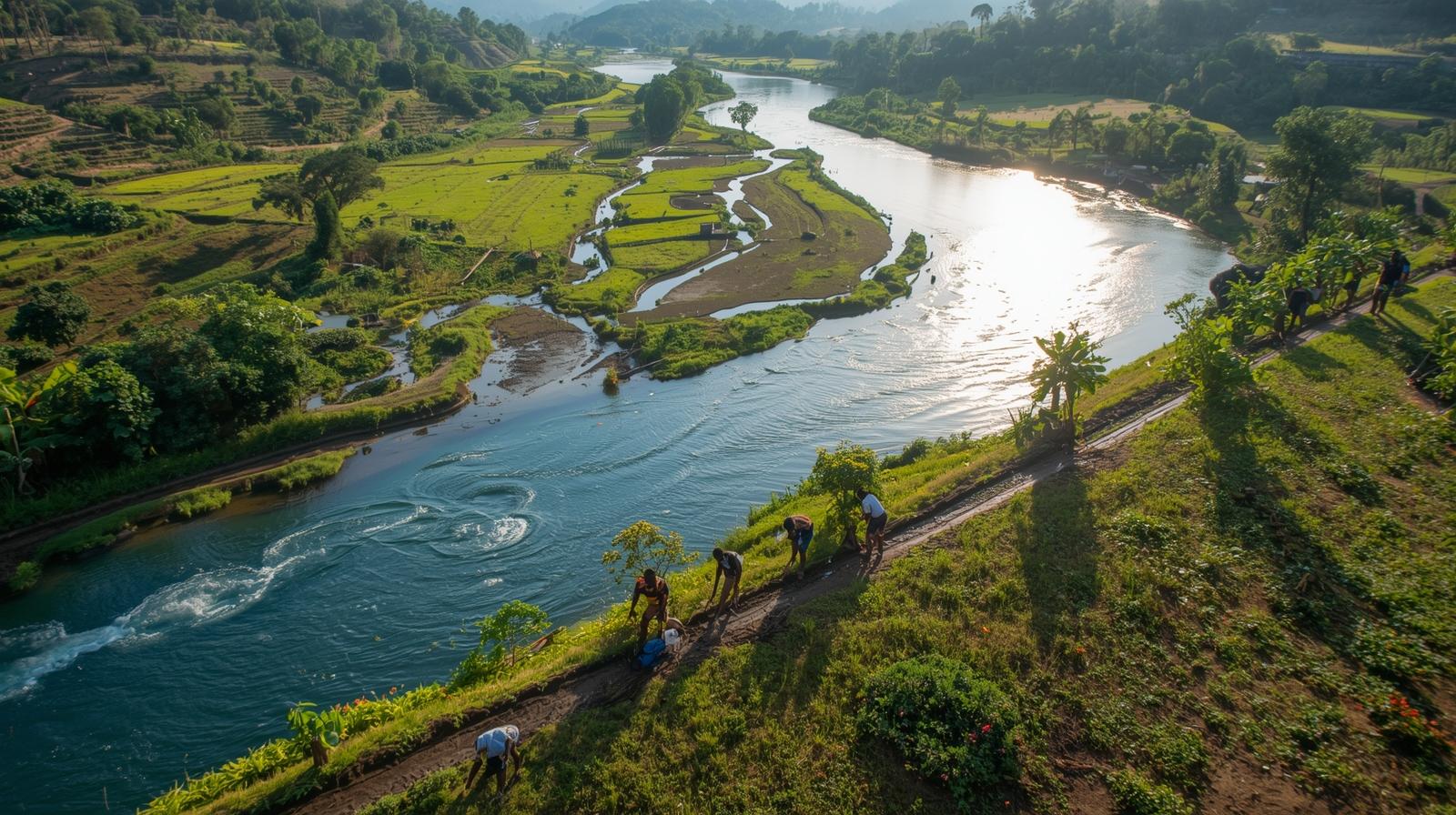

Why Water, Sanitation and Hygiene?: From fieldwork to global debates.
What does it mean to truly see a drop of water in a world constantly facing challenges, including climate change, global warming, and wars or conflicts?
Access to basic water and sanitation is recognized as a fundamental human right worldwide. Nevertheless, billions of individuals continue to lack access to these basic services. A Joint Monitoring Program of UNICEF and the World Health Organization Report 2000-2024 indicates that approximately one in four people- or 1.4 billion individuals, depend on basic water services. Furthermore, 287 million have access to limited water services, 302 million utilize unimproved water sources, and 106 million still consume surface water.
Regarding sanitation, two out of five individuals globally lack safely managed sanitation services, and approximately 2 billion people have only basic sanitation services. The report further indicates that at least 1.7 billion individuals remain without basic hygiene services at home, including 611 million without access to any facilities and 354 million continue to practice open defecation.
While progress has been made, significant gaps persist, and people living in low-income countries, fragile contexts, rural communities, children, and minority ethnic and indigenous groups face the greatest disparities. These numbers are not just statistics; they are stories of families struggling every day, women and children walking more than 6 kilometers (just over 3.7 miles) daily to fetch water for their household, children missing school, and communities trapped in cycles of poverty and disease.
This blog, A Drop of Insight, contributes to changing the dialogue. It is about connecting experiences or field realities to global coverage and exploring how we can work together to achieve Sustainable Development Goal 6 (SDG 6): Clean water and Sanitation for all.
A personal Journey…
More than five years ago, I began my journey in the water and sanitation sector. My work involved engaging with rural and peri-urban communities in Uganda, where I conducted baseline and mid-term review surveys. This encompassed data collection, evaluation of water and sanitation projects, and support for applied research focusing on access to clean water, sanitation, and hygiene. As my experience grew, I recognized that each field report and statistical data at some point represented an individual with unique needs and circumstances.
One unforgettable experience comes from a woman in Nagalama village. She shared how she wakes up at 5:00 a.m. with her children to fetch water. The nearest water source is a shallow, muddy pond surrounded by bushes and shared with livestock. She explained that her children often suffer from stomach illnesses, and sometimes they miss school to help her collect water. These realities were not just numbers in a survey; they are lived experiences of resilience, sacrifice, and survival.
Upon completing advanced studies in Water Management, Governance, and International Relations, I have developed a comprehensive understanding of the complexities surrounding water and sanitation issues. I have come to recognize that these challenges extend beyond local contexts; they represent significant global political, economic, and environmental concerns. For instance, water scarcity can instigate conflicts, deficiencies in sanitation can impede health and educational outcomes, and inadequate governance can undermine sustainable development. Therefore, the discourse surrounding water and sanitation transcends mere infrastructure; it fundamentally relates to issues of dignity, development, and justice.
Why Water and Sanitation Matter
Is it not clear? Water represents a critical intersection of multiple sectors. The absence of clean and safe water compromises health systems, leading to an increase in preventable diseases. Inadequate sanitation and water services present significant barriers to education, particularly for girls. Furthermore, insufficient water security can result in heightened migration, reduced food production, and escalating levels of poverty and hunger.
Additionally, the lack of collaborative governance and management over shared lakes and rivers may intensify conflicts. In summary, achieving Sustainable Development Goal 6 (SDG 6) transcends water and sanitation alone; it is intrinsically linked to the attainment of all other sustainable development goals. Ensuring access to clean water and adequate sanitation services is essential for fostering thriving communities.
This blog aims to bring discussions concerning water and sanitation that are often confined to academic journals, reports, and stakeholder meetings. It aims to examine and disseminate field experiences, narratives, and insights from underprivileged communities, thereby encouraging dialogue on the ways in which financial aid, climate change, technology, and leadership shape outcomes in water and sanitation.
Furthermore, this blog will present practical examples of successful case studies, innovations, and effective solutions, illustrating how these can be adapted for implementation in other regions facing analogous challenges.
Join the conversation..
This platform extends beyond a personal blog; it serves as a platform for dialogue. Whether you are a student, researcher, representative of a non-governmental organization, policymaker, or an individual committed to enhancing the world for future generations, I encourage you to engage with me. I welcome your perspectives, ideas, opinions, questions, and experiences. Together, we have the capacity to effect meaningful change.
Leave a Reply